Water testing and chemical balancing
Pool Water Testing and Chemical Balancing in Zimbabwe
Learn how testing, water source and correct chemical handling affect swimming pool water quality in Zimbabwe.
APBZ service guide
Test first, then adjust
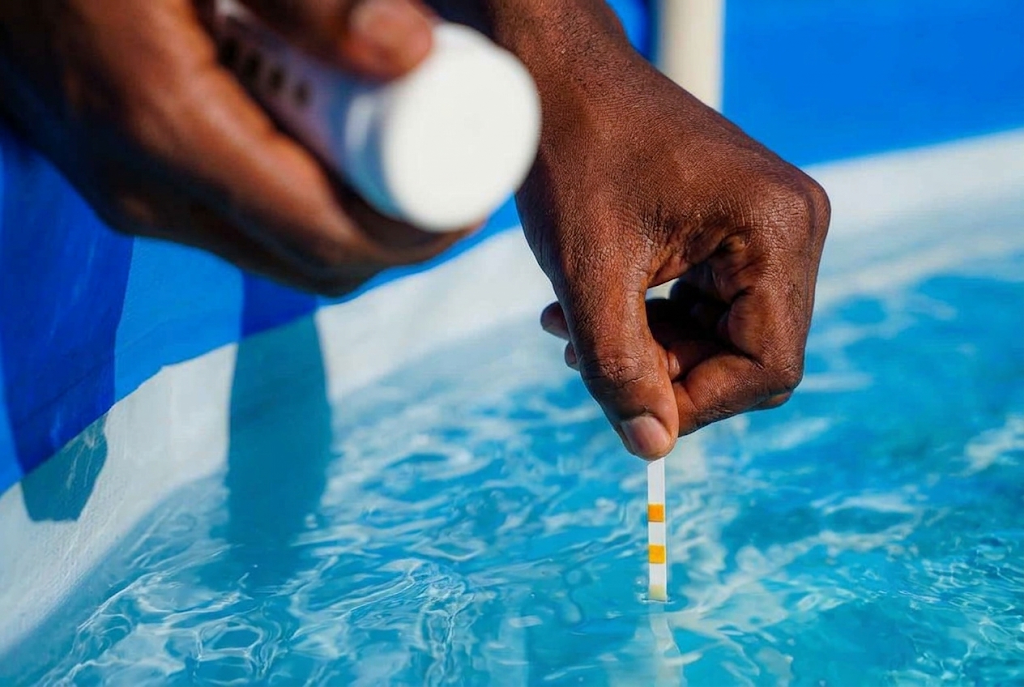
Clear-looking water is not proof that a pool is balanced. Testing helps identify pH, sanitiser, alkalinity and other conditions that affect swimmer comfort, disinfection, scaling, corrosion and the pool finish. The right targets depend on the treatment system and product instructions, so use reliable equipment and follow the manufacturer’s guidance.
Zimbabwean water sources can vary. Borehole water may contribute minerals or hardness; delivered water may have different characteristics from municipal supply; and rain can dilute or contaminate the pool. A record of the source and test results helps a professional choose a sensible treatment approach.
Testing works best when paired with regular cleaning and reliable circulation; if a renewed finish is being protected, follow the guidance on resurfacing and relining.
- Test with clean equipment and a representative sample
- Record results before adding treatment products
- Adjust one factor at a time where practical
- Allow circulation and retest after treatment
- Store and handle chemicals according to their labels
Why balance affects the whole pool
Water chemistry influences metal fittings, grout, marbelite, paint, liners, heaters and equipment seals. Water that is too aggressive can damage surfaces and components; water that is poorly sanitised can become unsafe or develop odour and algae. Both extremes can create expensive problems that are not fixed by cleaning alone.
Responsible chemical handling
Keep products in their original labelled containers, dry and ventilated, away from children, food, fuel and incompatible chemicals. Never mix products together. Follow the label, use suitable protective equipment and obtain professional help if you are uncertain about a reading, product or reaction.
When to call a professional
Ask for help when water remains cloudy or green, readings change unexpectedly, the pool has a strong odour, the finish is staining, or treatment is not improving the condition. A technician can assess the water, circulation, filtration and source of the problem together.
Frequently asked questions
Frequently asked questions about Pool Water Testing and Chemical Balancing in Zimbabwe
How often should pool water testing and chemical balancing be carried out?
It depends on use, trees, dust, storms and the filtration system. Set a routine for skimming, brushing, vacuuming, basket cleaning and filter checks, then increase it after windy weather or heavy use.
Why is water testing important to pool water testing and chemical balancing?
Testing shows whether pH, sanitiser, alkalinity and other conditions are suitable. Clear-looking water is not proof of safe balance; use the water-testing guide.
What should happen after rain or a power cut during pool water testing and chemical balancing?
Remove debris, check water level and circulation, inspect the filter and retest the water before reopening. Do not add chemicals blindly or operate damaged equipment.
How can borehole water affect pool water testing and chemical balancing?
It can. Borehole water may contribute hardness, metals or other minerals, so test the source and monitor staining, scaling and chemical demand rather than assuming it behaves like municipal water.
How should a commercial operator organise pool water testing and chemical balancing?
It should name responsible staff, visit frequency, water-testing records, cleaning tasks, filter work, incident reporting, closure rules, spares and emergency response. See commercial maintenance.
When should a pool be closed during pool water testing and chemical balancing?
Close it when water quality, circulation, electrical safety, barriers or supervision cannot be confirmed. Record the reason and complete a reopening check before allowing use.
Explore related APBZ guidance
Use these related pages to compare options, prepare questions and find accredited professionals for your project.
Pool maintenance and water care in Zimbabwe
Place testing inside a complete maintenance programme.
Explore serviceSwimming pool cleaning in Zimbabwe
Remove the debris and deposits that affect water quality.
Explore servicePool pumps, filtration and circulation
Understand why circulation and filtration matter.
Explore servicePool resurfacing and relining in Zimbabwe
Protect renewed finishes through consistent water care.
Explore service