Commercial pool maintenance
Commercial Pool Maintenance in Zimbabwe
A practical maintenance framework for hotel, lodge, school, club and public-use swimming pools in Zimbabwe.
APBZ service guide
Commercial pools need documented routines
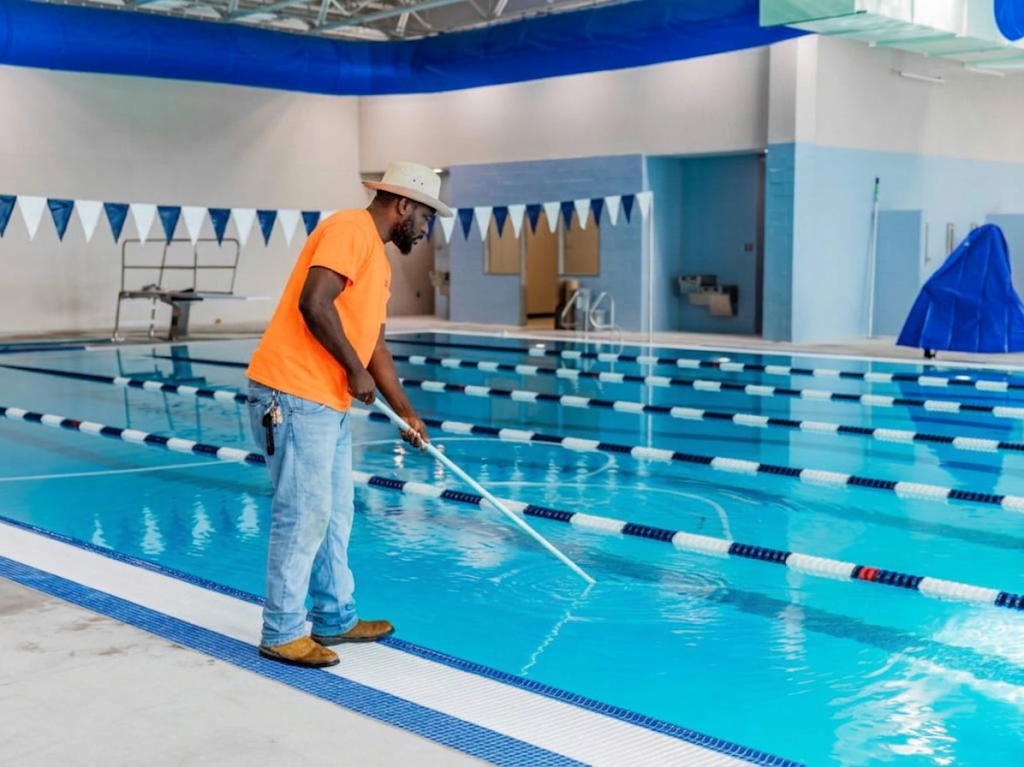
A commercial pool has more users, longer operating hours and greater consequences when water quality or equipment fails. Hotels, lodges, schools, clubs and residential developments need a repeatable maintenance system with assigned responsibilities, records, escalation steps and a clear decision about when the pool must close.
The programme should cover cleaning, water testing, circulation, filtration, chemical storage, plant-room safety, deck and drainage checks, covers, barriers, signage and emergency readiness. The routine should reflect the actual facility rather than copying a domestic checklist.
For a new or upgraded facility, connect the operating plan to commercial and lodge pool construction guidance and use documented water testing to support reopening decisions.
- Opening and closing checks with named staff
- Recorded water readings and treatment actions
- Cleaning, filter and pump inspection schedules
- Plant-room, electrical, chemical-storage and access controls
- Fault response, incident records, spares and contractor support
Maintenance is part of facility management
The pool operator should know who checks the water, who authorises treatment, who cleans the area, who responds to equipment faults and who can close the pool. A simple log should record readings, chemical additions, filter work, incidents, complaints, repairs and reopening checks.
Planning around Zimbabwean constraints
Water interruptions, power cuts, imported equipment lead times and seasonal storms can affect operations. Keep a spares list, identify alternative supply arrangements and agree an outage procedure. Do not keep a pool open when circulation, treatment or safety controls cannot be confirmed.
Contractor support and audits
Whether maintenance is done in-house or by a service company, the scope should state visit frequency, included tasks, consumables, response times, reporting, exclusions and emergency support. Periodic independent checks can help verify that the documented routine matches the pool’s actual condition.
Frequently asked questions
Frequently asked questions about Commercial Pool Maintenance in Zimbabwe
How often should commercial pool maintenance be carried out?
It depends on use, trees, dust, storms and the filtration system. Set a routine for skimming, brushing, vacuuming, basket cleaning and filter checks, then increase it after windy weather or heavy use.
Why is water testing important to commercial pool maintenance?
Testing shows whether pH, sanitiser, alkalinity and other conditions are suitable. Clear-looking water is not proof of safe balance; use the water-testing guide.
What should happen after rain or a power cut during commercial pool maintenance?
Remove debris, check water level and circulation, inspect the filter and retest the water before reopening. Do not add chemicals blindly or operate damaged equipment.
How can borehole water affect commercial pool maintenance?
It can. Borehole water may contribute hardness, metals or other minerals, so test the source and monitor staining, scaling and chemical demand rather than assuming it behaves like municipal water.
How should a commercial operator organise commercial pool maintenance?
It should name responsible staff, visit frequency, water-testing records, cleaning tasks, filter work, incident reporting, closure rules, spares and emergency response. See commercial maintenance.
When should a pool be closed during commercial pool maintenance?
Close it when water quality, circulation, electrical safety, barriers or supervision cannot be confirmed. Record the reason and complete a reopening check before allowing use.
Explore related APBZ guidance
Use these related pages to compare options, prepare questions and find accredited professionals for your project.
Pool maintenance and water care in Zimbabwe
Use the wider maintenance framework as a starting point.
Explore servicePool water testing and chemical balancing in Zimbabwe
Make treatment decisions from recorded results.
Explore serviceCommercial and lodge pool construction in Zimbabwe
Plan access, plant rooms and handover information.
Explore serviceHow to find the best pool companies in Zimbabwe
Compare relevant experience and written service commitments.
Explore service