Swimming pool cleaning
Swimming Pool Cleaning in Zimbabwe
Understand the cleaning tasks, frequency and local conditions that keep residential pools clear and pleasant in Zimbabwe.
APBZ service guide
Cleaning is more than removing leaves
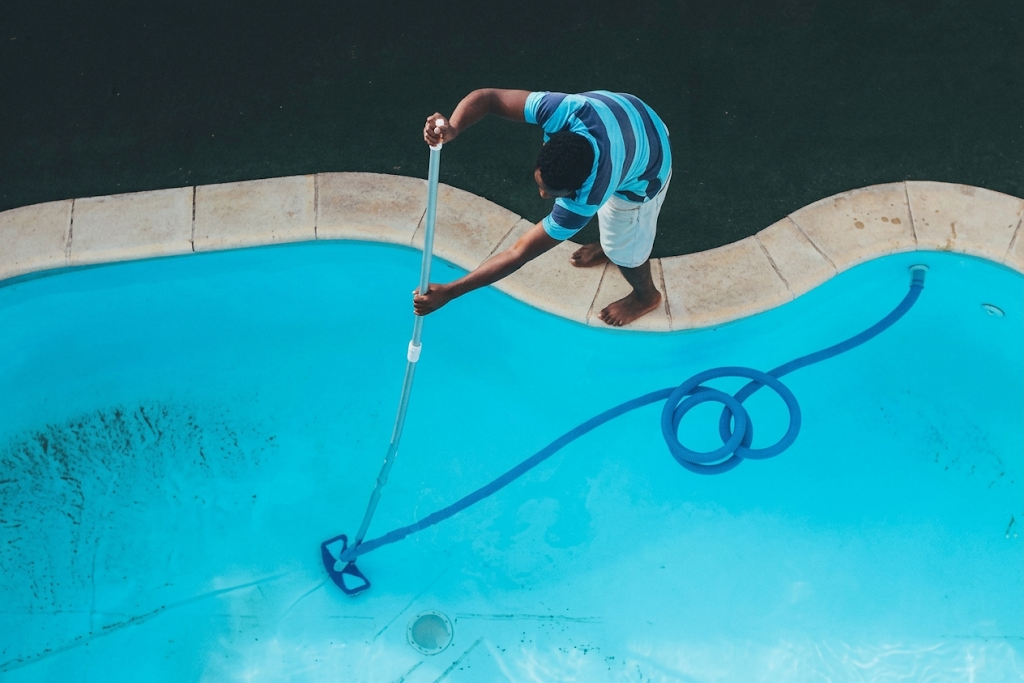
Cleaning removes debris and deposits that consume sanitiser, restrict circulation and make a pool harder to balance. A proper routine combines surface skimming, brushing, vacuuming, basket cleaning, filter attention and a visual inspection of the waterline, steps, fittings and surrounding deck.
Cleaning frequency depends on trees, wind, dust, storms, swimming load and whether the pool has a cover. Harare properties with mature gardens may need more frequent debris removal, while a pool near construction or an unpaved area can receive fine dust that quickly affects the water and filter.
Cleaning is one part of a complete maintenance programme; persistent cloudiness or algae should also prompt a check of water balance and circulation.
- Skim leaves and floating debris
- Brush walls, steps, corners and the waterline
- Vacuum settled dirt using the correct method
- Empty skimmer and pump baskets safely
- Check clarity, circulation and water level after cleaning
How often should a pool be cleaned?
There is no single Zimbabwe-wide schedule. A lightly used pool with a secure cover may need a different routine from a family pool under trees or a lodge pool used every day. Check the pool after storms and periods of heavy use, and increase cleaning when debris, dust or algae appears.
Cleaning equipment and safe practice
Use equipment suited to the pool finish and circulation system. Do not run a pump dry, reach into moving equipment or mix chemicals during cleaning. Store chemicals securely, follow labels and keep children and visitors away from the plant room and work area.
When cleaning reveals a fault
Persistent dirt in one area, weak returns, air in the system, repeated algae or unusual water loss can point to circulation, filtration, plumbing or structural problems. Record what you observe and ask for an assessment instead of repeatedly increasing chemical doses.
Frequently asked questions
Frequently asked questions about Swimming Pool Cleaning in Zimbabwe
How often should swimming pool cleaning be carried out?
It depends on use, trees, dust, storms and the filtration system. Set a routine for skimming, brushing, vacuuming, basket cleaning and filter checks, then increase it after windy weather or heavy use.
Why is water testing important to swimming pool cleaning?
Testing shows whether pH, sanitiser, alkalinity and other conditions are suitable. Clear-looking water is not proof of safe balance; use the water-testing guide.
What should happen after rain or a power cut during swimming pool cleaning?
Remove debris, check water level and circulation, inspect the filter and retest the water before reopening. Do not add chemicals blindly or operate damaged equipment.
How can borehole water affect swimming pool cleaning?
It can. Borehole water may contribute hardness, metals or other minerals, so test the source and monitor staining, scaling and chemical demand rather than assuming it behaves like municipal water.
How should a commercial operator organise swimming pool cleaning?
It should name responsible staff, visit frequency, water-testing records, cleaning tasks, filter work, incident reporting, closure rules, spares and emergency response. See commercial maintenance.
When should a pool be closed during swimming pool cleaning?
Close it when water quality, circulation, electrical safety, barriers or supervision cannot be confirmed. Record the reason and complete a reopening check before allowing use.
Explore related APBZ guidance
Use these related pages to compare options, prepare questions and find accredited professionals for your project.
Pool maintenance and water care in Zimbabwe
See how cleaning fits into a complete programme.
Explore servicePool water testing and chemical balancing in Zimbabwe
Connect cleaning with safe water treatment.
Explore servicePool renovations in Zimbabwe
Identify when recurring cleaning problems may indicate a wider issue.
Explore servicePool safety for homes, lodges and facilities
Keep the pool area safe while cleaning and servicing.
Explore service