Pool filter installation and care
Pool Filter Installation, Cleaning and Replacement in Zimbabwe
Compare pool filter installation, cleaning and replacement decisions for residential and commercial pools in Zimbabwe.
APBZ service guide
Filtration removes what the sanitizer cannot
The filter captures suspended dirt and helps the circulation system keep water clear. Sand, cartridge and other filter systems have different cleaning routines, pressure behaviour, space requirements and replacement considerations. The correct choice depends on pool size, use, debris load, available water and the owner’s ability to maintain it.
Zimbabwean pools may receive dust, leaves and organic material during dry or windy periods, while summer storms can increase the debris load. A filter should be installed with enough access for cleaning and with valves and waste routes that can be operated safely.
A filter that repeatedly blocks or shows unusual pressure may be affected by a circulation problem, not only by dirty media.
- Select filter capacity around actual flow
- Provide access for cartridges, media and pressure checks
- Use the correct cleaning or backwash procedure
- Monitor pressure and return flow
- Plan media, cartridge and seal replacement
Pressure is useful information
Record the clean-start pressure after servicing the filter. A rising pressure may indicate a dirty filter or restricted flow; unusually low pressure can indicate a pump, suction or air problem. Always follow the equipment instructions before opening a filter or changing a valve.
Cleaning methods differ
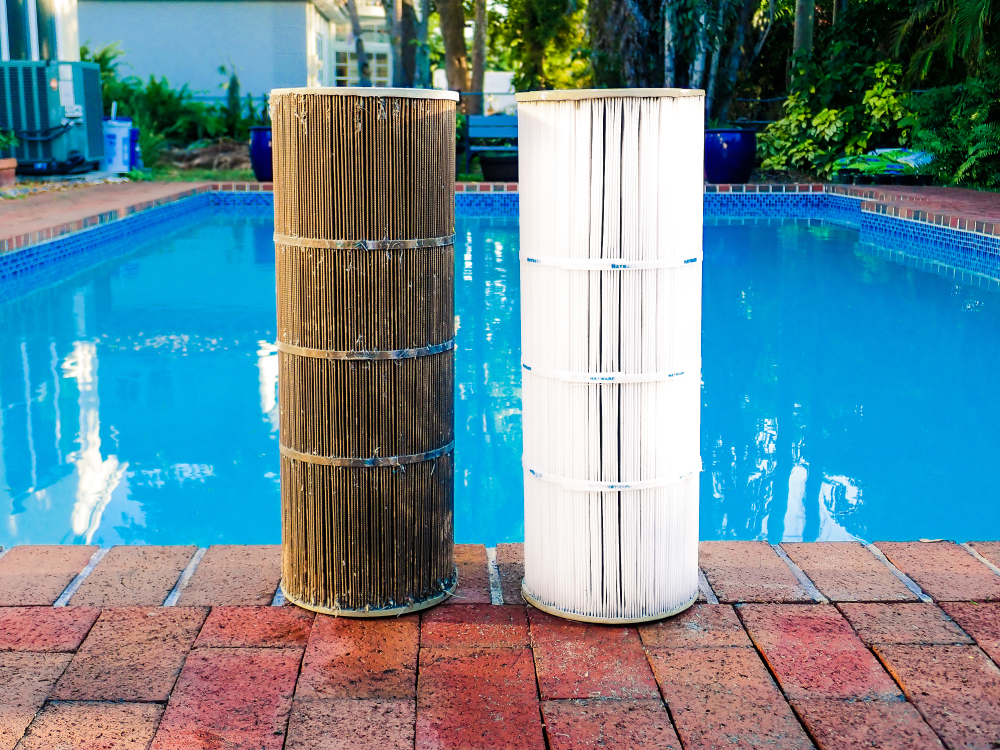
Cartridges are removed and cleaned according to their instructions. Sand or media filters may require backwashing and rinsing, which uses water and needs a suitable waste route. Incorrect cleaning can damage the media, send debris back to the pool or create an avoidable water shortage.
Replacement decisions
Replace a filter, cartridge or media when cleaning no longer restores performance, the body or seal is damaged, or the component no longer matches the pump and pool demand. Ask for a like-for-like explanation and check compatibility before purchasing.
Frequently asked questions
Frequently asked questions about Pool Filter Installation, Cleaning and Replacement in Zimbabwe
How should equipment be sized for pool filter installation, cleaning and replacement?
Sizing should consider pool volume, turnover, pipe length, bends, filter resistance, heaters and water features. Motor size alone is not a reliable design method; see pump sizing.
How can I distinguish a filter fault from a circulation fault during pool filter installation, cleaning and replacement?
A rising pressure after normal operation can indicate a dirty filter, while low pressure, air, loss of prime or weak flow everywhere may involve suction, pump or pipework. Record normal readings before changing parts.
How often should equipment be cleaned or serviced during pool filter installation, cleaning and replacement?
Clean or backwash according to filter type, pressure rise, water clarity and manufacturer instructions. Cartridge, sand and media systems have different procedures and water requirements.
Can a larger pump solve a problem with pool filter installation, cleaning and replacement?
Not automatically. A blockage, closed valve, air leak, poor pipe sizing or dirty filter may be the real cause. Diagnose the system first to avoid extra noise, pressure and energy use.
What should be recorded after equipment work related to pool filter installation, cleaning and replacement?
Keep model numbers, normal pressure and flow, valve positions, schedules, electrical details, cleaning instructions, warranty terms and supplier contacts.
How should Zimbabwean power interruptions affect pool filter installation, cleaning and replacement?
Discuss timers, safe restart, backup power, solar support and manual operation. Choose equipment that can be serviced locally and do not bypass electrical protection.
Explore related APBZ guidance
Use these related pages to compare options, prepare questions and find accredited professionals for your project.
Pool pumps, filtration and circulation in Zimbabwe
See how the filter fits into the equipment system.
Explore serviceSwimming pool pump selection and sizing in Zimbabwe
Match pump flow to filter capacity.
Explore servicePool circulation and flow problems in Zimbabwe
Use pressure and flow symptoms to find faults.
Explore servicePool equipment troubleshooting and upgrades in Zimbabwe
Evaluate replacement and upgrade options.
Explore service