Pool equipment troubleshooting and upgrades
Pool Equipment Troubleshooting and Upgrades in Zimbabwe
Decide whether to repair, replace or upgrade swimming pool equipment with a practical Zimbabwe-focused approach.
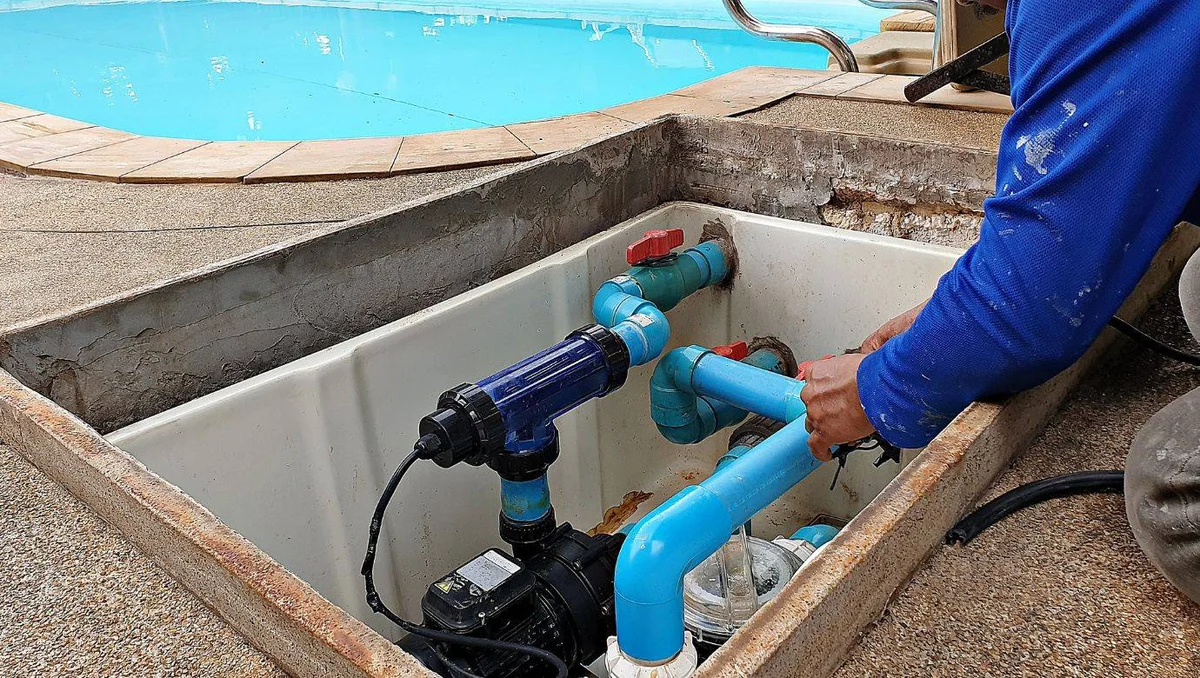
APBZ service guide
Troubleshoot before replacing
Equipment problems can come from the component itself, incorrect settings, poor connections, blocked filters, water loss or inadequate maintenance. A useful diagnosis records the symptom, when it occurs, what changed recently and which readings are different from normal.
Upgrades should have a clear purpose: lower operating costs, improve circulation, cope with increased use, support heating or water features, improve reliability during power interruptions, or make maintenance safer. The new equipment must be compatible with the pool volume, pipework, filter, electrical supply and available service support.
If the upgrade is prompted by high electricity use, first check pump sizing and operating hours rather than assuming the oldest component is automatically the cause.
- Describe symptoms and record normal readings
- Check maintenance, settings and connections first
- Compare repair cost with expected remaining service life
- Confirm compatibility and electrical requirements
- Request commissioning, instructions and warranty terms
Repair, replace or upgrade?
Repair may be sensible when the equipment is correctly sized, supported and still has serviceable parts. Replacement may be better when a motor, housing, filter body or control is unsafe, obsolete or repeatedly failing. An upgrade makes sense when the pool’s use, water features or operating conditions have changed.
Zimbabwe procurement and support
Ask about stock, lead times, local technical support, warranty handling and replacement parts. A product with attractive specifications can become difficult to operate if no one can service it or obtain the required seals, cartridges, controls or electrical components.
Handover after an upgrade
Obtain the model numbers, settings, normal readings, valve positions, cleaning instructions and maintenance schedule. Photograph the final installation and keep the information with the pool records.
Frequently asked questions
Frequently asked questions about Pool Equipment Troubleshooting and Upgrades in Zimbabwe
How should equipment be sized for pool equipment troubleshooting and upgrades?
Sizing should consider pool volume, turnover, pipe length, bends, filter resistance, heaters and water features. Motor size alone is not a reliable design method; see pump sizing.
How can I distinguish a filter fault from a circulation fault during pool equipment troubleshooting and upgrades?
A rising pressure after normal operation can indicate a dirty filter, while low pressure, air, loss of prime or weak flow everywhere may involve suction, pump or pipework. Record normal readings before changing parts.
How often should equipment be cleaned or serviced during pool equipment troubleshooting and upgrades?
Clean or backwash according to filter type, pressure rise, water clarity and manufacturer instructions. Cartridge, sand and media systems have different procedures and water requirements.
Can a larger pump solve a problem with pool equipment troubleshooting and upgrades?
Not automatically. A blockage, closed valve, air leak, poor pipe sizing or dirty filter may be the real cause. Diagnose the system first to avoid extra noise, pressure and energy use.
What should be recorded after equipment work related to pool equipment troubleshooting and upgrades?
Keep model numbers, normal pressure and flow, valve positions, schedules, electrical details, cleaning instructions, warranty terms and supplier contacts.
How should Zimbabwean power interruptions affect pool equipment troubleshooting and upgrades?
Discuss timers, safe restart, backup power, solar support and manual operation. Choose equipment that can be serviced locally and do not bypass electrical protection.
Explore related APBZ guidance
Use these related pages to compare options, prepare questions and find accredited professionals for your project.
Pool pumps, filtration and circulation in Zimbabwe
Set an upgrade objective and check compatibility.
Explore serviceSwimming pool pump selection and sizing in Zimbabwe
Compare capacity and operating costs.
Explore servicePool filter installation, cleaning and replacement in Zimbabwe
Match filtration to the new equipment.
Explore servicePool maintenance and water care in Zimbabwe
Plan the routine after the upgrade.
Explore service