Pool leak detection
Pool Leak Detection and Water Loss in Zimbabwe
Learn how swimming pool water loss is assessed and when a Zimbabwean pool may need a plumbing or structural investigation.
APBZ service guide
Water loss needs a measured investigation
Evaporation, splash-out, backwash and ordinary topping up can look like a leak. The first step is to measure the loss consistently and compare the pool with a controlled reference where appropriate. Weather, cover use, wind, water temperature and pool activity all affect the result.
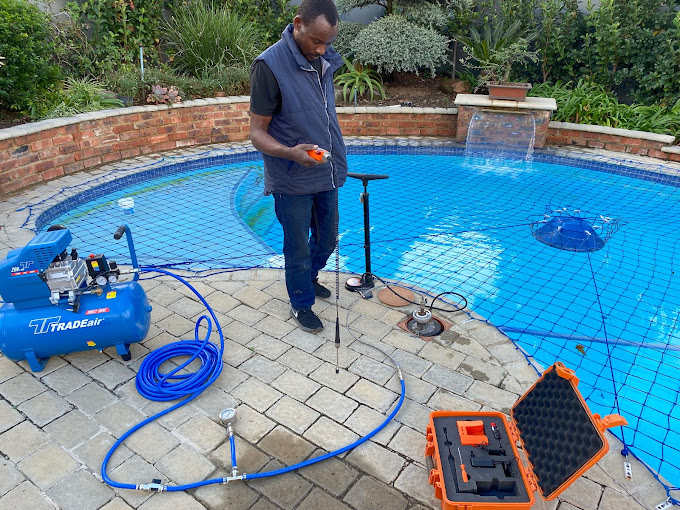
If the loss is unusual, the investigation should consider the shell, fittings, skimmer, drain, return lines, plant room, waste line and surrounding ground. Dye testing, pressure testing, listening equipment or other methods may be suitable depending on the pool and the suspected location. No single test proves every type of leak.
If you are unsure whether the loss is evaporation or a leak, use the APBZ pool leak checker for a quick first assessment before arranging professional testing.
When water loss is accompanied by weak circulation or air in the system, the next relevant check is often the pump and filter connection system, not simply more chemical treatment.
- Record water level and conditions over more than one observation
- Check evaporation, splash-out and backwash before assuming a leak
- Inspect accessible fittings, plant-room connections and wet areas
- Test sections of pipework where appropriate
- Repair and retest before restoring finishes or paving
Common signs of a possible leak
Unexplained water loss, a pump that repeatedly loses prime, air returning through the jets, wet ground near a line, a persistently low water level or a drop that changes when the pump runs can all justify an assessment. These signs are not a diagnosis; they help determine what should be tested.
Why location matters
A leak in a pressure return line may behave differently from a suction-side leak or a shell leak. Knowing when the loss occurs and where moisture appears helps the technician choose a sensible test. Ask for the evidence before agreeing to break paving or excavate the garden.
Repair and monitoring
After repair, record the date, location, method and result. Monitor the level again under similar conditions and keep the record with the pool’s maintenance information.
Frequently asked questions
Frequently asked questions about Pool Leak Detection and Water Loss in Zimbabwe
How can I identify abnormal water loss during pool leak detection and water loss investigation?
Compare evaporation with the pool covered and equipment isolated, while checking weather, splash-out and backwashing. Persistent unexplained loss needs a structured investigation; see leak detection.
Which symptoms point to a problem with pool leak detection and water loss investigation?
Air bubbles, loss of prime, weak returns, unusual pressure, wet ground, noisy suction or repeated chemical problems can point to a leak, restriction, valve issue or damaged line.
Should pool pipework be repaired or replaced during pool leak detection and water loss investigation?
It depends on location, material, access, failure pattern and the cost of excavation and reinstatement. A written scope should explain the test evidence and how paving or landscaping will be restored.
Can pump or filter connections affect pool leak detection and water loss investigation?
Yes. Incorrect valve positions, blocked baskets, air leaks, undersized lines and poor connections can restrict flow. Check the connection and equipment together before buying a larger pump.
Why do valves, returns and suction lines matter to pool leak detection and water loss investigation?
They determine how water moves, how equipment is isolated and how safely the system can be serviced. Label them and record normal positions at handover.
When does pool leak detection and water loss investigation require professional testing or repair?
Use a qualified professional for buried leaks, pressure testing, electrical equipment, persistent loss of prime or work that requires excavation near the shell or finished deck.
Useful tool
Check whether water loss looks abnormal
Answer four practical questions about your pool and get a likely starting point before a qualified professional carries out physical testing.
Use the pool leak checkerExplore related APBZ guidance
Use these related pages to compare options, prepare questions and find accredited professionals for your project.
Pool plumbing and leak detection in Zimbabwe
See how leak detection fits into the whole plumbing system.
Explore servicePool pipework and plumbing repairs in Zimbabwe
Plan the repair once the affected line is identified.
Explore servicePool renovations in Zimbabwe
Consider wider work when access or finishes must be opened.
Explore servicePool water testing and chemical balancing in Zimbabwe
Separate a leak problem from a water-treatment problem.
Explore service